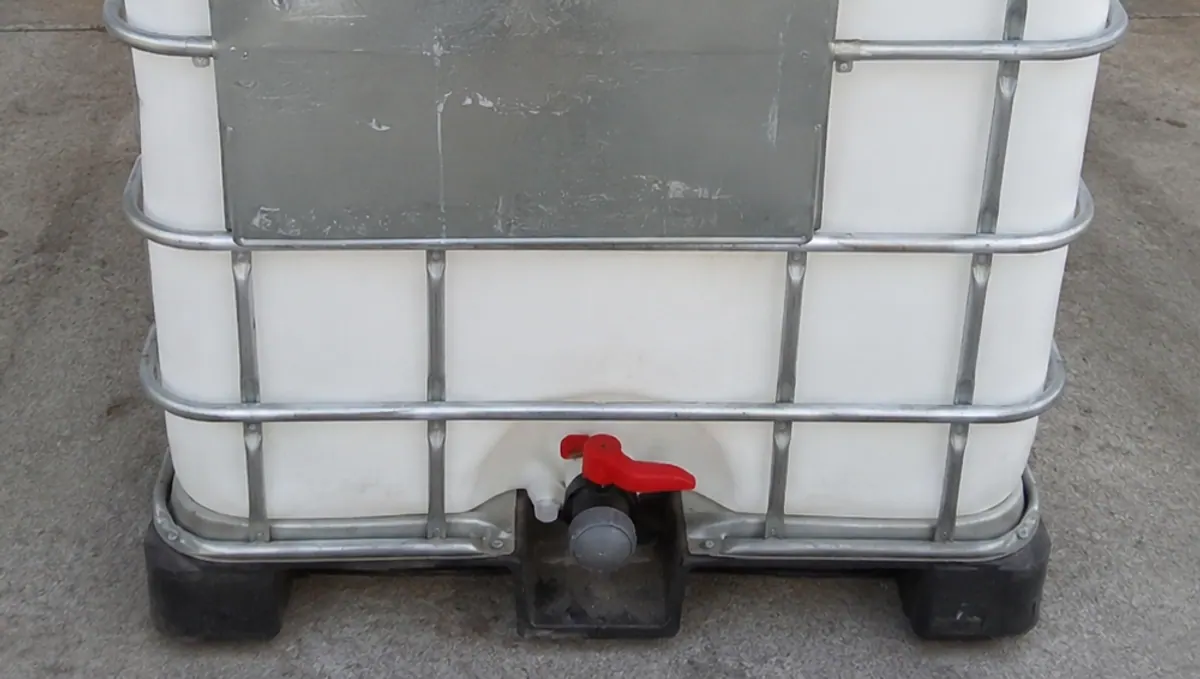
What the cage is actually for
Three jobs: carry the stacking load, protect the bottle from impact, and give the forklift something to push against. The bottle contributes essentially nothing structural once there is weight above it.
That is why cage condition determines whether a container can be stacked, and why a perfect bottle in a bent cage is a floor-level-only unit.
The five-minute inspection
Sight along each upright. Bowing is obvious once you look from the right angle and invisible from the front, which is why people miss it.
Check the welds at the corners and where the uprights meet the base frame. Cracked welds are the single most common structural defect and they propagate.
Look at the fork pockets. Deformed or closed-up pockets make the next lift awkward and the one after that dangerous.
Check the galvanising where it has been scraped through. Surface rust is cosmetic; flaking scale with pitting underneath is not.
Finally, set the unit on a flat floor and see whether it rocks. A twisted frame will not sit square and will never stack safely.
Straightening on a jig
A bowed upright is routinely recoverable. On our line it goes onto a hydraulic jig, gets pushed back to true, and gets re-checked for square. It is a couple of minutes of work and it saves a container.
What does not get straightened is anything with a cracked weld in the affected member, anything where the bow has produced a visible kink rather than a smooth curve, and anything that has been straightened before. Metal that has been worked twice is not metal you want under a stack.
Replacing versus scrapping
A replacement cage for a 275 is ninety-five dollars and takes two people about fifteen minutes with a socket set and a fresh bolt set. Against a replacement container, that is straightforwardly worth doing when the bottle is sound.
Scrap the cage when the base frame is twisted, when more than one weld has failed, or when corrosion has gone beyond surface scale into section loss. Baled steel has real value and a mill will take it, so a scrapped cage is not a waste event — it is just the end of that particular cage.
Always replace the bolts at the same time. Nine dollars for a galvanised set, and it is the difference between a fifteen-minute job and an afternoon with a grinder and some regret.
Written at 9003 Governors Row, Dallas. We publish these without a newsletter wall because gating a specification behind an email address is a small, petty thing to do. If something here is wrong, email us and we will correct it.