End of life · Zero landfill since 2016
Recycling & Regrind
Some bottles genuinely cannot be saved: breached walls, polymerised residue, UV-chalked plastic with no structural margin left. Those are granulated into HDPE regrind and the steel is baled. Nothing in the container stream goes to a landfill. Not one unit, not once.
Request: Recycling & Regrind
Quote, pickup, or recycling — one form.
Pick this service in the form, add the detail in the message field, and we will answer by email — usually the same day for collections.
Free, no-obligation quote. Orders and tote pickups are fulfilled through our regional IBC supplier network.
How it runs
6 steps, in the order they actually happen.
No stage is skipped and none of it is improvised. If we cannot do a step properly we decline the job rather than doing it badly.
Condemnation decision
A tote is condemned for a breached bottle, residue we cannot remove safely, or a second pressure-test failure. The decision is logged with a reason code.
Residual recovery
Any remaining product is captured, characterised and manifested. This is the step unlicensed recyclers skip and the reason you should ask who handles yours.
Teardown
Bottle separated from cage and base. Valve, lid and gasket removed; usable fittings return to the parts shelf rather than the shredder.
Granulation
The HDPE bottle is granulated to a specified particle size and bagged as regrind, sold as feedstock for non-food plastic products.
Steel baling
Cage and steel base are baled and sold to a mill. Galvanised tube steel is a well-established, genuinely circular material stream.
Reconciliation
Weights in and out are reconciled monthly. The gap between them is gaskets, labels and dust — grams, and we can account for it.
- RECYCLING & REGRIND
- 0 lb TO LANDFILL SINCE 2016
- 9% OF ARRIVALS CONDEMNED IN 2026
- 100% OF STEEL BALED TO MILL
- ~0 RESIDUAL WASTE AFTER RECONCILIATION
- EMAIL ONLY · ANSWERED IN ONE BUSINESS DAY
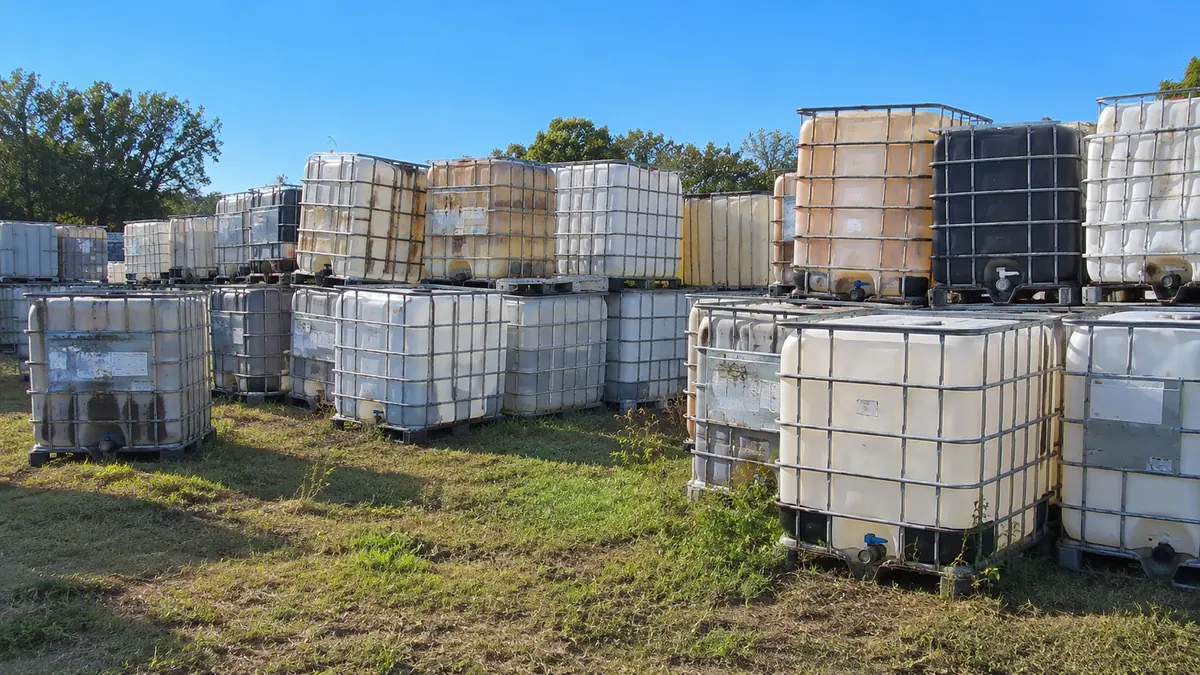
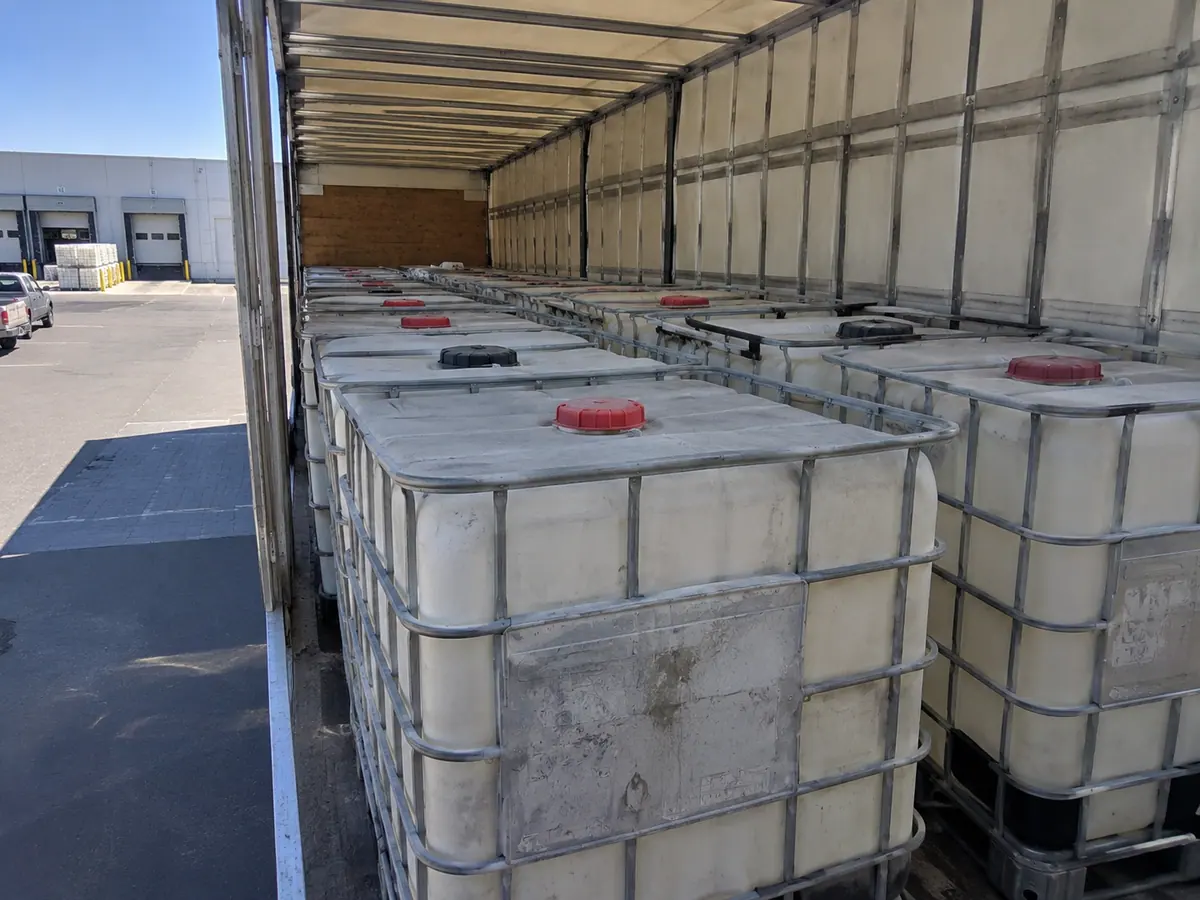
On the ground
What this looks like in practice.
Scope, in writing
What is included, and what is deliberately not.
Option A
Included as standard
- Documented condemnation reason for every unit
- Manifested residual disposal through licensed handlers
- Fitting salvage before granulation
- HDPE granulated to spec and sold as regrind feedstock
- Steel baled and sold to mill
- Monthly weight reconciliation available to customers on request
Option B
Not included
- Landfill disposal — we do not offer it and will not arrange it
- Recycling of containers with unknown contents
- Food-contact regrind claims; our regrind is non-food feedstock
- Acceptance of non-IBC waste streams
We would rather tell you now than discover it on a dock.
Why it matters environmentally
Recycling is the consolation prize. We treat it as a failure metric, not an achievement.
Every bottle that reaches the granulator is a container we did not manage to save, and the energy we recover is a fraction of the energy that went into making it. Our internal target is to send fewer units to recycling each year as a share of arrivals — which is the opposite of how most companies talk about their recycling numbers, and considerably more honest.
Questions
What customers ask before they commit.
01Can I get a certificate of destruction?
02Do you accept totes you will not buy?
03What happens to my branding?
04Is regrind actually used, or stockpiled?
Keep going
Related reading
Sell Us Your Totes
We buy empties by the pallet or by the trailer, and we pick them up for free in most of Texas.
ReadReconditioning & Washing
Hot caustic, triple rinse, pressure test, valve rebuild, cage straightening, re-labelling.
ReadFreight & Logistics
LTL, full truckload, and backhaul matching so empty miles stop being wasted miles.
ReadStart a recycling & regrind request.
One form, one inbox in Dallas, one business day. Tell us the situation in plain language — we will work out the logistics.