Work out what you are fighting
Settling is solids dropping out under gravity. It responds to gentle, continuous movement and it is the easiest case.
Separation is two liquid phases parting. It needs more energy and it comes back faster once you stop.
Stratification is a density or temperature gradient without a visible interface. It is the one people miss, and it is why a sample from the top of a tote can be meaningfully different from the product at the valve.
Clamp-on agitators
A clamp-on tote agitator mounts across the top frame with a shaft and impeller through the six inch lid. Around four hundred dollars for a third-horsepower unit, and it is the right answer for most settling and stratification problems.
Specify the impeller for the job. A marine-style propeller gives bulk flow with low shear and suits suspensions. A high-shear disc is for dispersing, and will foam anything with surfactant in it in about ninety seconds.
Run it intermittently rather than continuously wherever you can. Most settled products need a few minutes before draw-off, not constant motion, and the motor lasts longer.
Recirculation through a pump
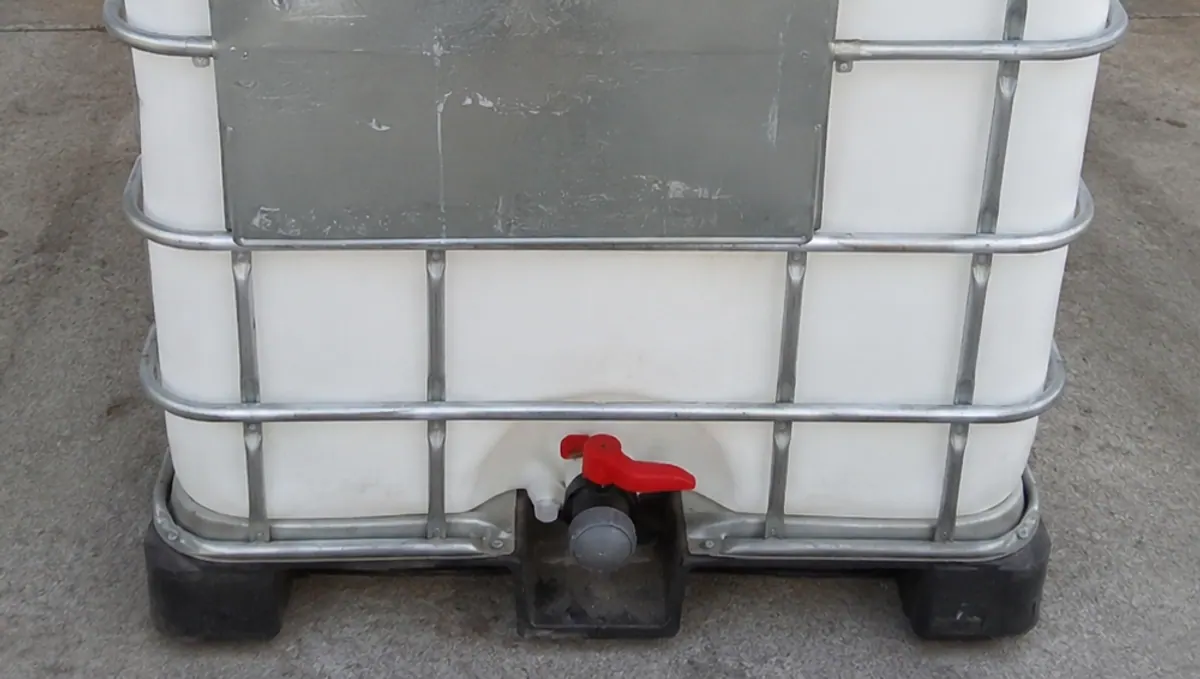
Draw from the 2 inch outlet, return through the lid, ideally via a dip tube that discharges below the surface. It needs no new penetrations and the pump may be equipment you already own.
The catch is shear. Centrifugal pumps are hard on emulsions, shear-sensitive polymers and anything with structure to lose. An air-operated diaphragm pump is far gentler and is worth the extra money for those products.
The other catch is air. A return line that splashes into the headspace entrains air, which makes foam and, with anything flammable, makes a static problem. Keep the return submerged.
What not to do
Do not roll or tip a full tote. 2,400 pounds moving on a forklift is a genuinely dangerous way to mix something, and it damages cages.
Do not drop compressed air into the bottom of a poly tote to agitate. It foams, it aerates the product, it can pressurise an atmospheric vessel, and with a flammable it is an ignition scenario.
Do not assume one pass is enough. Take a sample from the valve and a sample through the lid after mixing, and compare. If they differ, you have not finished.
Fabrication notes
If you are doing this regularly, let us fit bulkhead fittings rather than running hoses through the lid. A dedicated return port with an internal dip tube is a twenty-minute bench job and it removes the splash and the awkwardness permanently.
Add a sight gauge while the tote is on the bench. Knowing the level without opening the lid is worth more than it sounds.
Written at 9003 Governors Row, Dallas. We publish these without a newsletter wall because gating a specification behind an email address is a small, petty thing to do. If something here is wrong, email us and we will correct it.