The rule of thumb and its limits
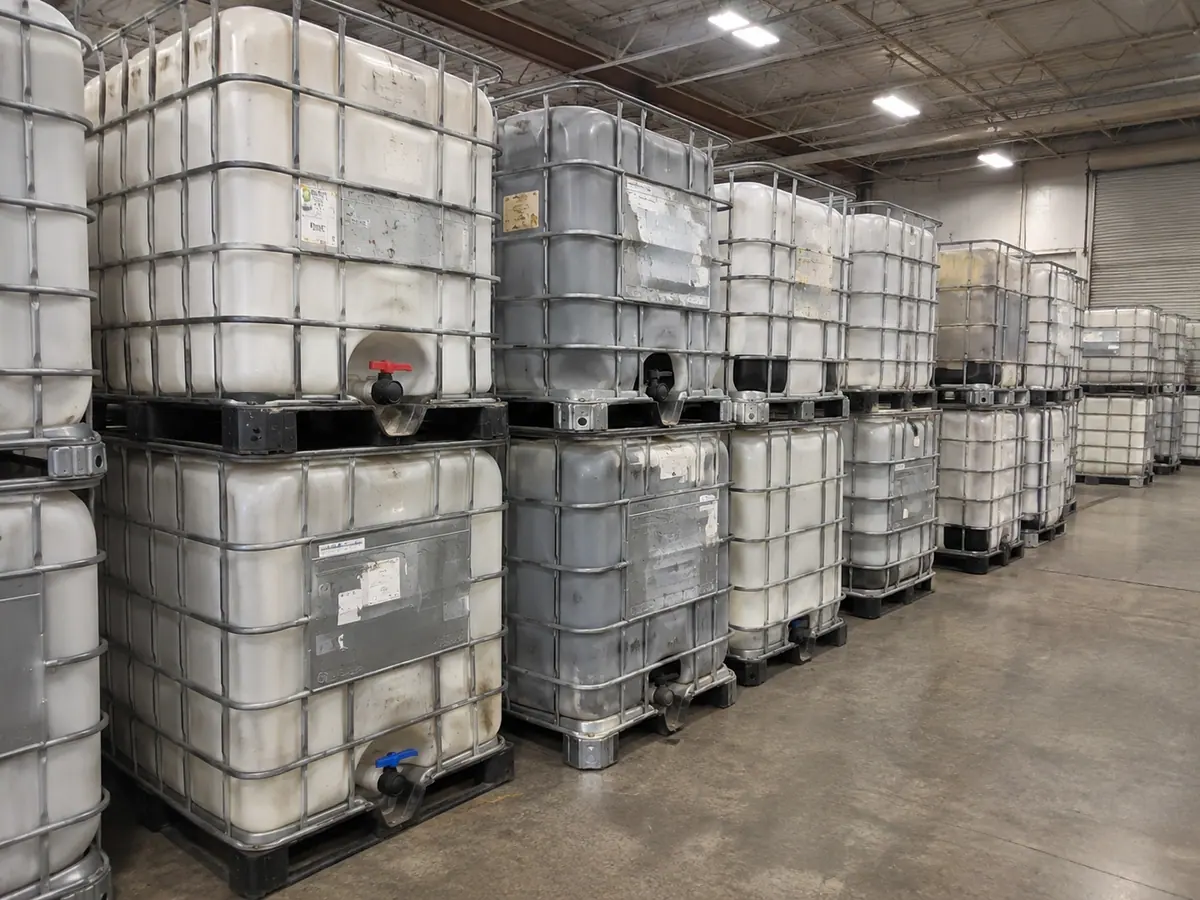
Two high when filled, three high when empty, on a flat and level floor. That is the working rule in most warehouses and it is right often enough to be useful. It is also not a specification, and the day it matters is the day it was wrong for your particular container.
The nameplate carries a stacking test load figure. That number is the authority. If the plate says the unit is not designed for stacking — category 2 in the UN design code, the digit after the material letters — then it does not stack at all, no matter how sturdy it looks.
What actually carries the load
Not the bottle. The steel cage and the base frame carry stacking load, which is precisely why a damaged cage disqualifies a tote from being stacked even though the bottle is perfect.
This is the single most common unsafe practice we see. A tote with a bowed upright or a cracked pallet corner gets put on the bottom of a stack because it is “only holding weight”, when holding weight is the one job it can no longer do reliably.
Inspect before stacking: uprights straight, welds intact, base corners undamaged, fork pockets square. If any of those fail, that unit stays on the floor.
The conditions that quietly change the answer
Floor flatness. A stack on an uneven floor loads two corners instead of four, and the rated figure assumes four.
Temperature. A warm bottle is a softer bottle, and a warm filled tote under another filled tote creeps measurably over weeks. Stacks in an unventilated metal building in summer deserve more conservatism than the rule of thumb provides.
Time. Stacking ratings assume a transport or short-storage duration. A stack that stands for eighteen months is a different loading case, and we would not do it two high filled.
Product density. If you have filled to weight rather than to volume because the product is heavy, your stack is heavier than the rating assumed even though the tote looks normally full.
Transport is stricter than storage
In a trailer, movement adds dynamic load that static storage does not have. Dunnage between tiers, strapping, and a sensible view about road quality all matter.
For empties going back to us, two high is standard practice with dunnage and that is what we load. For 330s, verify your trailer's interior height before you plan on double-stacking — two of them plus dunnage reaches around 110 inches and plenty of trailers do not clear it.
And never stack a damaged unit for return freight just because it is empty and “going for recycling anyway”. It still has to survive the journey without collapsing onto something.
Written at 9003 Governors Row, Dallas. We publish these without a newsletter wall because gating a specification behind an email address is a small, petty thing to do. If something here is wrong, email us and we will correct it.