Why totes suit this job
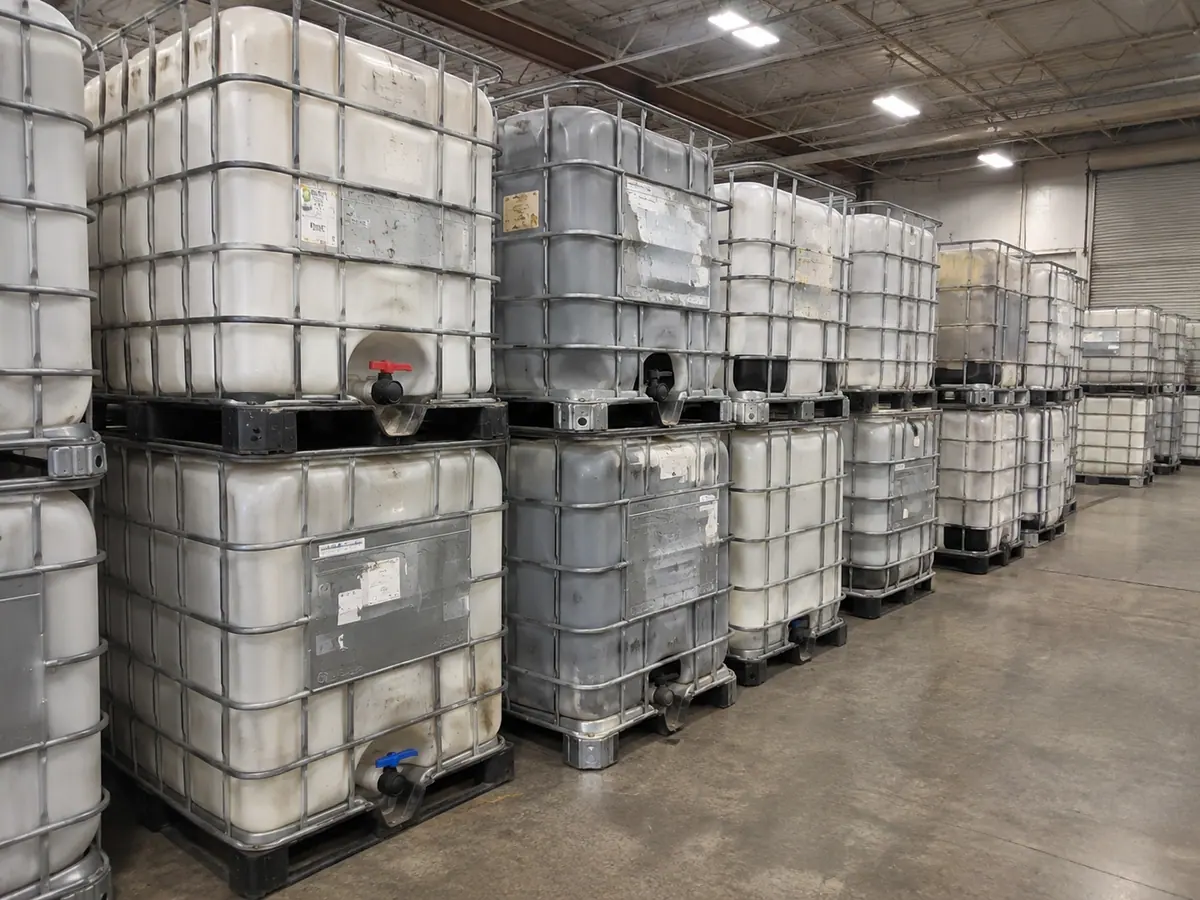
Used cooking oil collection is a volume game with awkward logistics: many small sources, irregular quantities, and a product that nobody wants to handle twice. A 275 gallon tote on a forklift is a good fit for all of it.
Technical grade is appropriate. This is not a food application even though the feedstock started as one, and paying for food-grade containers here is money spent for no benefit.
Problem one: temperature and viscosity
Used oil thickens as it cools and some fractions solidify. A tote that filled easily in September will not discharge in January, and the standard response — applying heat — is where people get into trouble.
Keep contents below 120 °F and use a thermostat. An uncontrolled band heater against a bottle full of thick oil will create a local hot spot, soften the wall and deform it.
Insulate before you heat. A jacket halves the duty and smooths the swings, and swings are what damage the container.
Problem two: water and settling
Used cooking oil carries water, and water settles to the bottom along with food solids. Draw from the standard bottom outlet and the first thing you get is the worst of it.
That is occasionally what you want — decanting the water layer off deliberately. More often it is not, and a dip tube drawing from part way up the bottle solves it. We fit those on the bench routinely.
Settled solids also go anaerobic and smell. Totes sitting part-full for months are the source of almost every complaint we hear about this application.
Problem three: classification
Used cooking oil is generally not a hazardous waste, but it is a regulated waste stream in many jurisdictions and the rules differ by state and by whether you are a generator, a transporter or a processor.
If you are moving it on public roads in quantity, find out which of those you are before you build a collection round. The container choice is the easy part of this question.
Biodiesel itself and the methanol used to make it are a different conversation entirely. Methanol is a flammable and does not belong in a standard composite IBC — see our piece on static and flammable liquids, and then buy the right vessel.
Practical fittings
Cam-lock on the outlet, because these totes get connected and disconnected constantly and threads wear out.
A vented lid, because gravity discharge of a viscous product will dimple a sealed bottle inward.
A dip tube if you are avoiding the water layer, and a sight gauge if you are tracking fill without opening lids.
And a drain plan for the sludge, because there will be sludge and it is the part nobody budgets for.
Written at 9003 Governors Row, Dallas. We publish these without a newsletter wall because gating a specification behind an email address is a small, petty thing to do. If something here is wrong, email us and we will correct it.