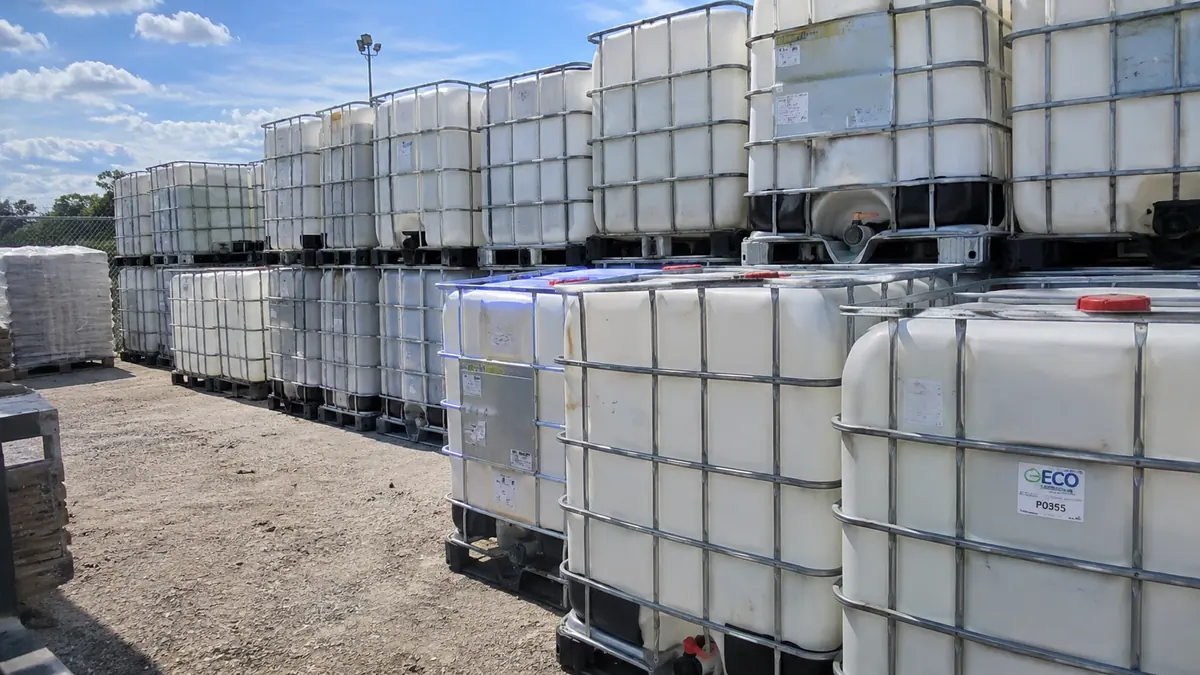
Why auction lots are cheap
Sometimes because a plant closed and the containers are genuinely surplus. Sometimes because a receiver needs the yard cleared by a date. Those are good lots and you should buy them.
And sometimes because the containers have no provenance, carry a residue nobody wants to characterise, and would cost the seller money to dispose of properly. An auction converts that liability into revenue. That is the lot you want to identify before you bid, not after.
Check one: the paperwork question
Ask the auctioneer, in writing, what the prior contents were. Not “are they clean” — what was in them. If the answer is unavailable, price the lot as scrap value only, because that is the only use you can safely put it to.
A good lot comes with a plant name and a product. A bad lot comes with the word “various”.
Check two: the nameplate
Photograph it or read it in person. The manufacture date tells you where the container sits in its five-year dangerous-goods life, which matters if you have any regulated intentions and tells you about likely condition even if you do not.
A lot of totes with illegible or missing nameplates is a lot of containers that can never be used for anything regulated. That may be perfectly fine for your purpose. It should be reflected in what you pay.
Check three: the bottle, by torch
Open the lid and look inside with a torch. You are looking for residue depth, crystallisation, and whether the interior is wet. A tote with two inches of settled product in the bottom is not an empty container, it is a part-full one, and moving it may be a regulated activity.
From outside, check for crazing and chalking. In an outdoor lot that has sat through a couple of summers, assume ultraviolet damage until you have evidence otherwise.
Check four: the cage and base
Walk the row and look at base corners. Forklift damage is the most common structural fault and it is instantly visible once you are looking for it. A cracked poly base is a fifty-eight dollar part, which is fine if you knew; less fine across forty units you did not inspect.
Check fork pockets are square. A deformed pocket means the next lift is awkward and the one after that is dangerous.
Check five: the exit cost
This is the one that catches people. Work out, before you bid, what you will do with the units that turn out to be unusable — and assume a quarter of an uninspected lot will be.
If the answer is “take them to a landfill”, find out whether anyone local will actually accept them and at what price. If the answer is “sell them on”, you are now in our business and you should know that it is mostly refusals and paperwork.
Add that exit cost to your bid arithmetic. A lot at four dollars a tote with a thirty dollar per unit disposal exposure is not a cheap lot.
Written at 9003 Governors Row, Dallas. We publish these without a newsletter wall because gating a specification behind an email address is a small, petty thing to do. If something here is wrong, email us and we will correct it.