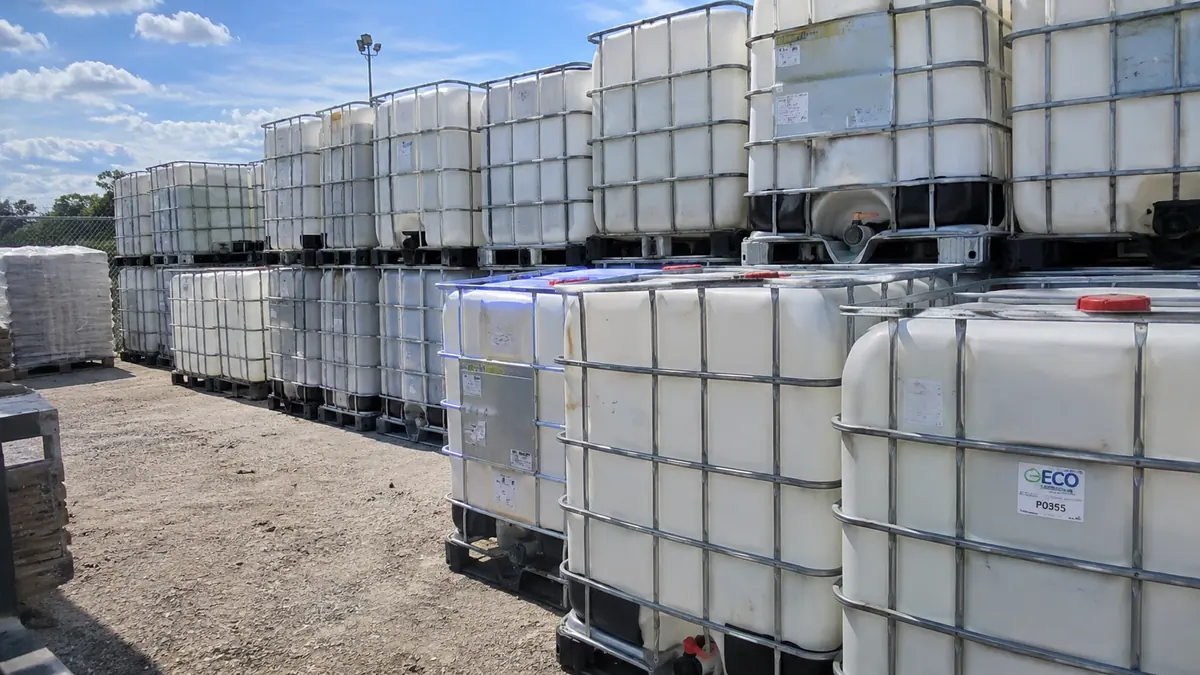
One: grade, which is really provenance
The single biggest driver, and it is not about how clean the container looks. A documented food-grade 275 can be double the price of an as-is one in identical physical condition, because what you are buying is the history and the paperwork.
Food grade is scarce because the food industry treats these as single-trip packaging, and catching them before they are shredded takes relationships rather than cleverness. Technical grade is plentiful. As-is is whatever walks in.
Two: what it costs us to make it sellable
This is the one nobody asks about. A tote that arrives with a clean, legible nameplate, a working valve, a straight cage and an identifiable prior product goes through the line in forty minutes and comes out as stock.
A tote that needs a cage straightened, a valve body replaced, a base swapped and two trips through the wash costs us several times that in labour and parts. Same container, very different cost base, and the price reflects it.
It also means the price we pay you for empties depends heavily on condition — not because we are being fussy, but because we are pricing our own work.
Three: quantity
Breaks start at ten units and get serious at forty-eight, which is a full trailer floor plus a double-stacked return leg. The saving is mostly freight and handling rather than margin on the containers.
A single tote costs nearly as much to stage, document, photograph and invoice as twenty do. That administrative floor is why the price on one unit is thin and non-negotiable.
Four: distance
Inside about six hundred miles of Dallas, freight is a modest share of landed cost. At sixteen hundred it rivals the containers. Beyond that we will often tell you to buy locally.
Flexible dates genuinely change this. We check every quote against our own collection schedule, and a matched backhaul can take a serious bite out of a lane rate.
Five and six: size and timing
Size moves the number less than people expect. A 330 is typically about fifteen percent more than a 275 and holds twenty percent more, so cost per gallon improves slightly — unless your product is dense enough that you cannot fill it, in which case the 275 wins outright.
Timing is seasonal and real. Fertigation in spring, de-icer in autumn, bulk water in summer. The same tote costs less in the quiet months and the growers who plan for that pay noticeably less than the ones who do not.
What is not in the price
Any assessment of whether the container suits your specific product. We will tell you everything we know about what was in it, how it was washed and whether it passed the test, and the compatibility judgement remains yours. Nobody honest sells that as a warranty.
Written at 9003 Governors Row, Dallas. We publish these without a newsletter wall because gating a specification behind an email address is a small, petty thing to do. If something here is wrong, email us and we will correct it.