Wood is the first trap
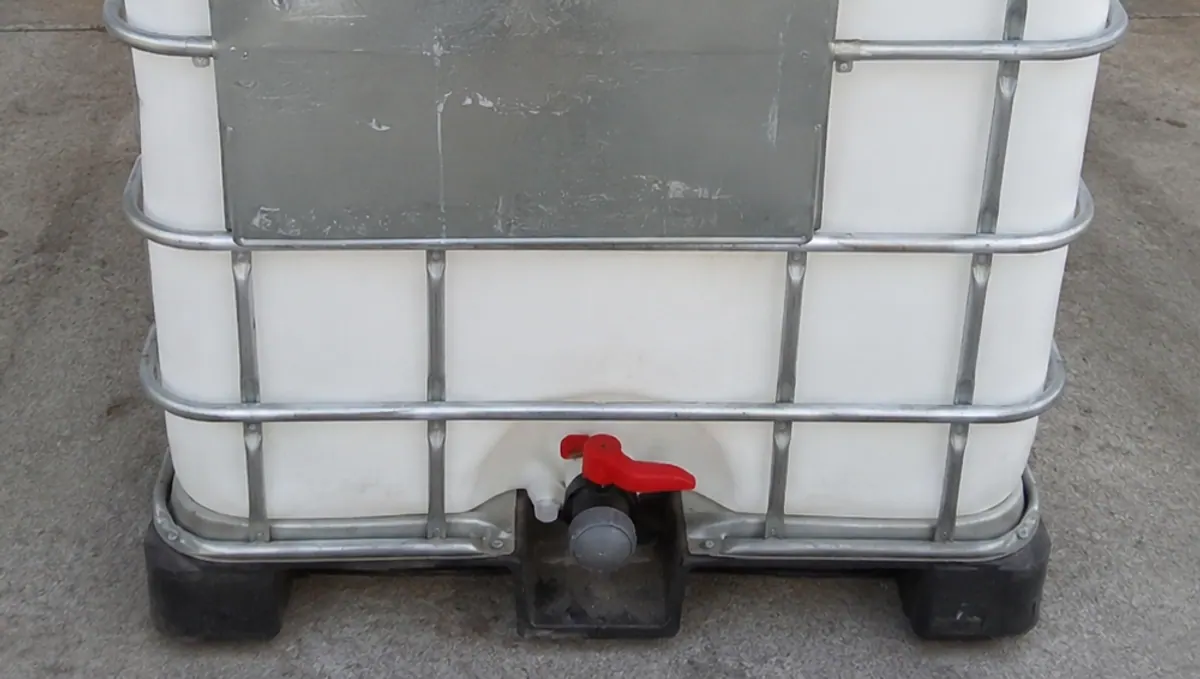
Any solid wood packaging crossing a border needs ISPM-15 treatment and marking — heat treated or fumigated, with the stamp to prove it. That includes a wooden IBC base and any wooden dunnage in the container.
Poly, composite and steel bases are unaffected, which is one more reason we simply do not reuse wooden bases. If you are exporting, specify a non-wood base at the point of order and the problem disappears.
The inner receptacle question
Many overseas buyers and forwarders will not accept a reconditioned inner bottle, regardless of grade or documentation. Sometimes that is a regulatory position and sometimes it is a procurement preference, and arguing with it rarely works.
A rebottled unit — new HDPE bottle in a reclaimed, blasted and re-coated cage — satisfies that requirement while still reusing the heavy half of the container. It is the single most useful product we have for export customers and most of them have never been offered it.
Residuals change the classification
An empty container that held a dangerous good is frequently still a regulated shipment unless it has been cleaned to a defined standard and documented as such. Uncleaned empties crossing a border is a category that generates more stopped shipments than almost anything else.
Decide early whether you are shipping these as cleaned or as residue-bearing, because the paperwork, the carrier and the cost all differ. Discovering the distinction at a port is expensive.
Loading and container maths
A 20 foot ocean container takes ten totes on the floor, twenty double-stacked if they are empty 275s and the height allows. A 40 foot doubles both figures.
330s rarely double-stack in an ocean container. Those seven extra inches, again.
Secure them. Sea freight imposes motion that road freight does not, and a shifted load in a sealed box is discovered at the worst possible moment.
What we do and do not do
We prepare containers to an agreed specification, supply prior-contents and wash documentation, fit non-wood bases, and build rebottled units where a new inner receptacle is required.
We do not act as a freight forwarder and we do not file customs entries. We will happily refer you to people who do that properly, and we would rather do that than pretend otherwise and get it wrong on your behalf.
Written at 9003 Governors Row, Dallas. We publish these without a newsletter wall because gating a specification behind an email address is a small, petty thing to do. If something here is wrong, email us and we will correct it.