The principle, before the rules
Secondary containment exists to catch the contents of a container when the container fails, long enough for somebody to notice and act. That is the whole idea. Everything else — sizing rules, material compatibility, drainage — follows from it.
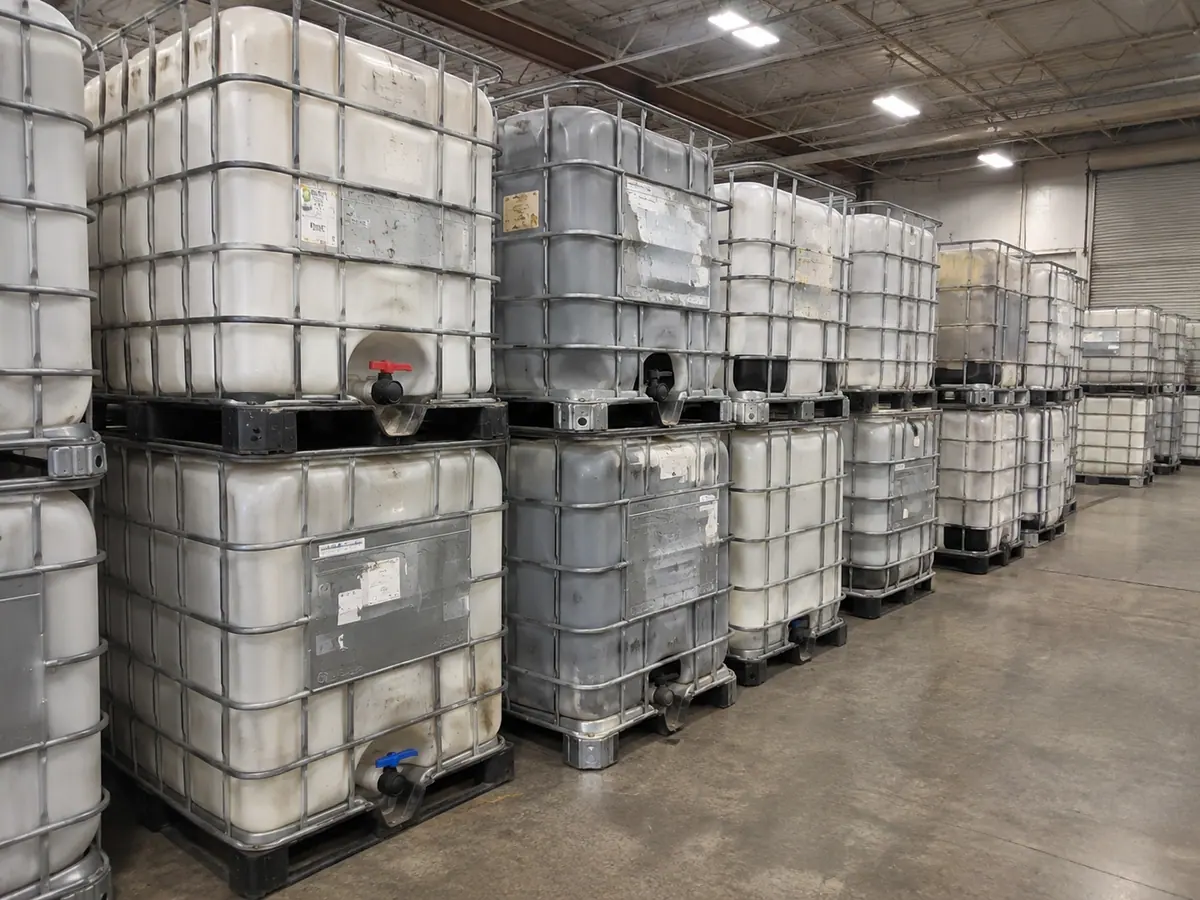
The practical consequence for an IBC tote is that you need a tray, a kerbed area or a bunded room capable of holding at least the volume of the largest container in it, plus a margin. For a single 275 gallon tote that means a containment capacity of roughly 300 gallons once you allow for rainfall if it is outdoors.
When it is genuinely required
If you store oil in quantity, federal SPCC rules may apply to your facility and they are explicit about containment. The thresholds are about aggregate storage capacity rather than about any single tote, which catches people out — four totes of hydraulic oil can put you over a line that one tote did not.
If your product is a hazardous waste, containment is required and so is inspection recordkeeping. If it is a regulated chemical under your state's environmental rules, check locally, because states layer their own requirements on top.
If the tote sits anywhere that drains to a storm sewer, a watercourse or bare ground, treat containment as mandatory regardless of what the rulebook says. The cost of a bunded pallet is two or three hundred dollars. The cost of a release into a storm drain starts at a consultant and goes up from there.
When a reasonable person would use it anyway
Indoors on a sealed concrete floor with a floor drain, holding a non-hazardous detergent: technically you may not need containment, and you should still use it, because the drain is the problem. Anything that reaches a floor drain reaches the public system.
Anywhere a forklift operates near the tote. The most common cause of a sudden release is not corrosion, it is a mast or a fork making contact with a bottle at speed.
Anywhere the tote is stacked. A failure in the upper container becomes a failure onto the lower one, and containment at floor level is the only thing that catches the combined volume.
Choosing hardware without overspending
A single-tote bunded pallet in polyethylene is the common answer and it is right most of the time. Check the sump capacity against your tote volume, not against the pallet's footprint.
For two or more totes, a bunded platform or a kerbed area with a ramp is usually cheaper per container and much easier to inspect. Visibility matters: a sump you cannot see into is a sump nobody checks.
Material compatibility applies to the containment as well as the container. Polyethylene handles most things; strong oxidisers and some solvents want steel or a coated system. If in doubt, ask the supplier of the product rather than the supplier of the pallet.
And put an inspection interval on it. Weekly visual, monthly documented. A bund with six inches of rainwater in it has no spare capacity, which means on the day you need it, it is not containment — it is a paddling pool.
Written at 9003 Governors Row, Dallas. We publish these without a newsletter wall because gating a specification behind an email address is a small, petty thing to do. If something here is wrong, email us and we will correct it.