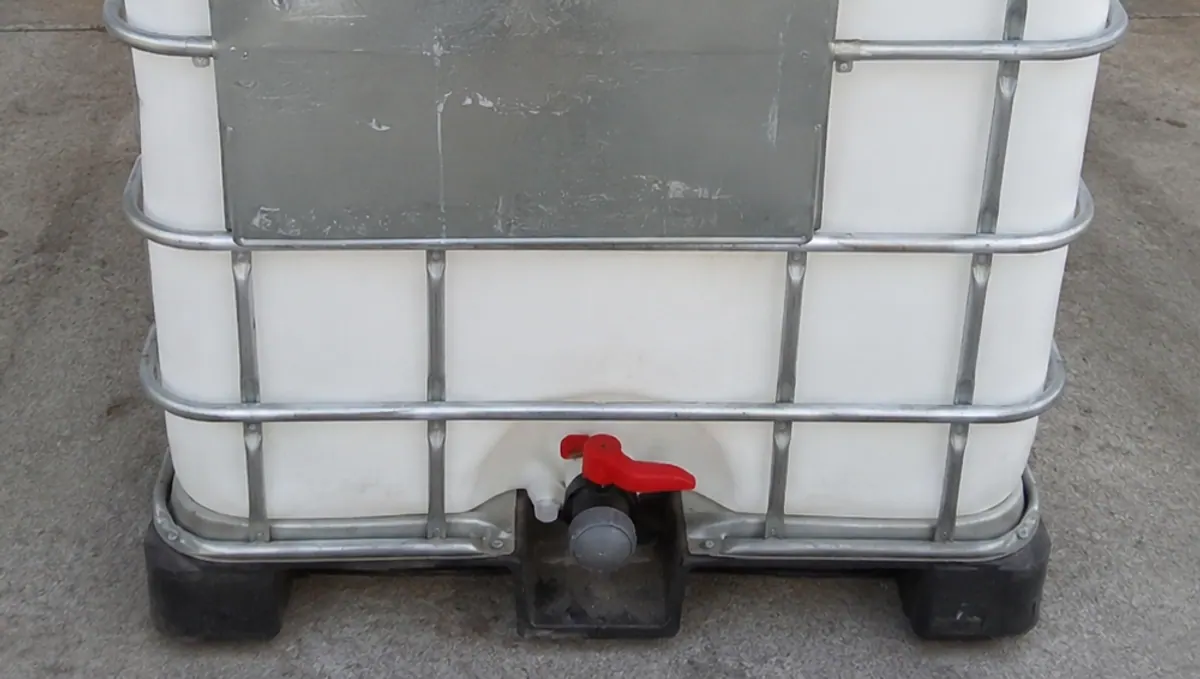
The first question is where the water goes
Before you think about brushes, chemicals or pressure washers, work out where the rinsate ends up. If the answer is a yard drain, a storm sewer, a ditch or bare ground, stop. That is the point at which an ordinary bit of housekeeping becomes a discharge, and discharges are regulated by what is in them, not by how much you intended.
If the answer is a sealed sump you can pump out and manifest, or a trade effluent connection you are permitted for, you are in business. If you have neither, send the tote to someone who does. Our wash line captures everything into a clarifier, presses the solids and manifests them, which is not a flourish — it is the reason we can wash at all.
What you can reasonably do yourself
A tote that held potable water, a food product or a genuinely innocuous detergent can be rinsed on site without much ceremony. Fill a third full with warm water, add a little of a compatible cleaner, cap it, and roll it or agitate it. Drain, repeat twice, leave to dry with the lid off in shade.
For algae in a rainwater tote, a dilute sodium hypochlorite solution, a long-handled brush through the six inch lid, and a thorough rinse will do it. Then paint the outside, because you are otherwise going to repeat this every August.
Drying matters more than people think. A bottle that is sealed while damp grows things. Leave the lid off, leave the valve open, give it a day of air.
What you should not attempt
Anything that held a product you cannot identify. You cannot select a cleaning method for an unknown, and mixing an unknown with a cleaner is how people generate gas in a confined space.
Anything that held a flammable. Washing leaves vapour, vapour collects in the headspace, and a 275 gallon plastic container is a poor place to discover static discharge. This is specialist work with inerting and bonding, and the specialists charge for it because it deserves charging for.
Anything with crystallised or polymerised residue. Once a product has set inside a bottle it does not come out with water and agitation. We route those straight to the granulator and so should you.
Anything going into food service that did not previously hold food. Cleaning changes condition, not history, and no amount of scrubbing turns a technical-grade container into a food-grade one.
Pressure washers and the hidden damage
A pressure washer through the lid feels productive and does real harm if you are careless. Close-range high pressure on HDPE abrades the surface, creating microscopic texture that holds residue far better than the original smooth wall did. The tote looks cleaner and is harder to clean next time.
Keep the lance moving, keep it at a distance, and prefer volume over pressure. The thing that actually removes residue is hot water, time and a compatible surfactant, not force.
And wear the right protection. The single most common injury in this business is not a crush or a cut — it is someone catching a faceful of rinsate from a tote they thought was empty.
Written at 9003 Governors Row, Dallas. We publish these without a newsletter wall because gating a specification behind an email address is a small, petty thing to do. If something here is wrong, email us and we will correct it.