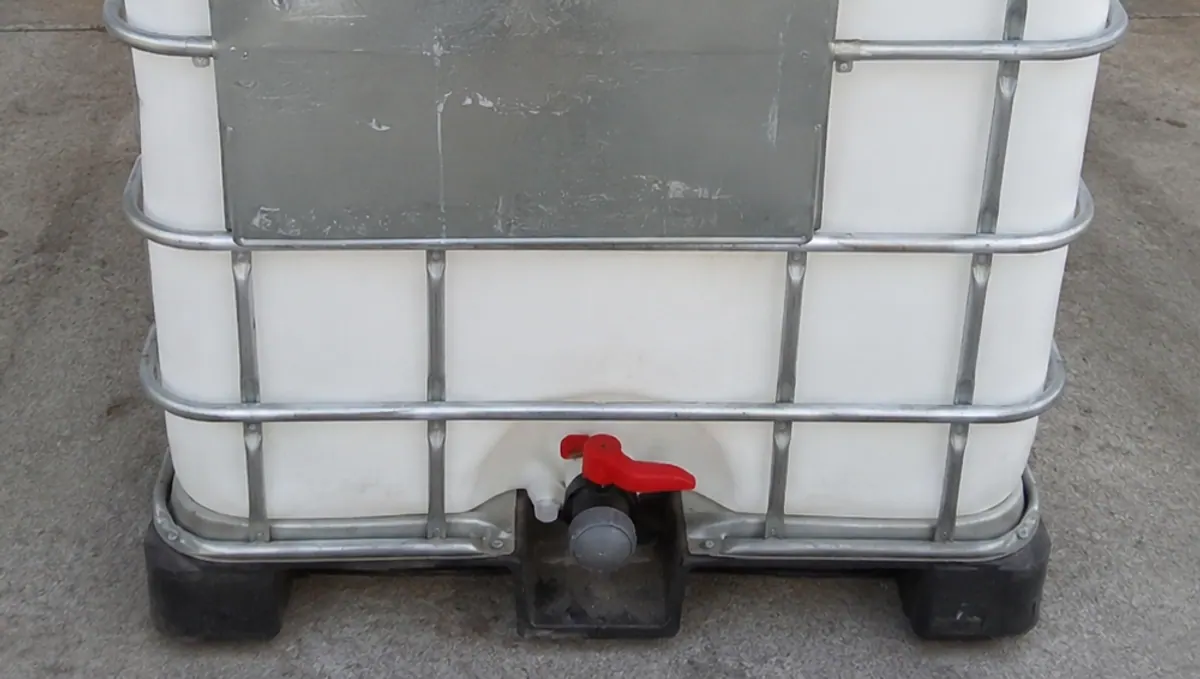
The failure mode nobody plans for
When we condemn a 275 gallon bottle, roughly half the time the reason is ultraviolet degradation rather than impact or chemistry. That surprises people. They assume a container dies from being used, when in fact it dies from being parked.
High-density polyethylene handles sunlight badly without stabilisers. The polymer chains break down at the surface, the wall goes chalky and loses flexibility, and fine crazing appears — a web of hairline cracks that looks cosmetic right up until the moment it is not. A crazed bottle that has been fine for a year will split along those lines the first time a forklift nudges it in cold weather.
How fast it actually happens
In Dallas, a natural translucent bottle sitting in full southern exposure shows visible chalking within about one summer and meaningful crazing by the end of the second. Further north it takes longer; in Arizona or west Texas it is quicker still. Shade changes the picture entirely — a tote under a simple roof will outlast an exposed one several times over.
The second problem with translucent bottles outdoors is biological rather than structural. Light gets inside, and anything with nutrient in it grows algae. We have opened rainwater totes in August that were effectively green soup, and the owner's only mistake was not painting the thing.
What to do about it, in order of cost
Shade is free if you have any, and it is the single most effective intervention. A carport, a lean-to, the north side of a building, even a tarp on a frame. Anything that keeps direct sun off the bottle changes the service life from years to decades.
Paint is the next cheapest. Exterior latex in a dark colour, two coats, after a wipe-down with isopropyl alcohol so it keys properly. It blocks light, stops algae and costs perhaps fifteen dollars per tote. It does need refreshing every few years.
Fitted covers are tidier and more expensive. They work well, but check them after storms — a cover that traps moisture against the bottle in a humid climate is a different sort of problem.
Specifying opaque bottles at purchase is the professional answer. Opaque HDPE with carbon black is dramatically more UV-stable than natural translucent, and the price difference at our counter is small. If you know the tote is living outdoors, buy for that on day one.
Checking an outdoor tote before you refill it
Run a bare hand over the sunward face. If it feels like chalk and leaves a white residue on your palm, the surface layer has degraded. That alone is not condemnation, but it means the clock is running.
Look across the surface at a low angle with a torch. Crazing shows up as a fine net of lines that catch the light. If you can see it, pressure test before you trust the tote with anything you would not want on the floor.
Flex a corner of the bottle gently with your thumb. Healthy HDPE gives and springs back. Degraded HDPE feels brittle and may make a faint crackling sound, which is the only warning you will get.
And check the cage while you are there. Galvanising survives sun perfectly well, but where it has been scraped through, rust will have been quietly working for exactly as long as the bottle has been fading.
Written at 9003 Governors Row, Dallas. We publish these without a newsletter wall because gating a specification behind an email address is a small, petty thing to do. If something here is wrong, email us and we will correct it.