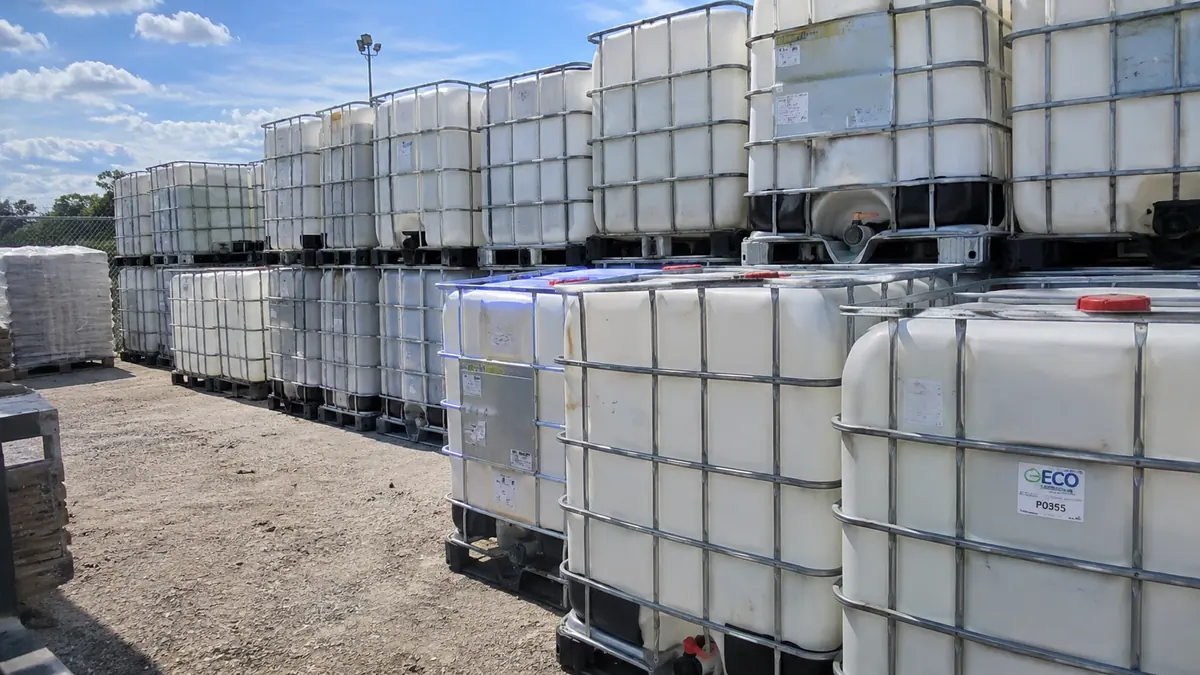
The difference between storage and recirculation
A tote used for storage holds a product for a while and then empties. A hydroponic reservoir holds the same water, pumps it past roots, and returns it, over and over, for the length of a crop cycle.
That changes the risk profile completely. Any residue that leaches out of the wall at a slow rate has weeks to accumulate, and the plants are in continuous contact with the result. A trace of surfactant that would be irrelevant in a wash-water tank will show up as root damage and stunted growth in a recirculating system.
Surfactants are the specific villain
Detergent and surfactant residues are the most common cause of mysterious hydroponic failures traced back to a container. They are designed to be surface-active, they cling to polymer walls, and they damage root membranes at concentrations far below anything you would taste or smell.
This is why we are firm about it: a technical-grade tote that carried a soap or a cleaner is not suitable for hydroponics no matter how well it was washed. The grade exists to tell you about history, and the history is the problem.
Light is the second problem
A natural translucent bottle full of nutrient solution under grow lights or daylight will grow algae, and quickly. Algae competes for nutrient, clogs emitters, crashes dissolved oxygen at night and fouls pumps.
Block the light completely. Paint the exterior with two coats of dark exterior latex, or wrap it. Do not rely on a shaded position — reflected light is enough.
Then check the lid and any plumbing penetrations, because that is where light gets in after you have carefully painted the walls.
Practical build notes
Fit bulkhead fittings rather than drilling and hoping. A 2 inch bulkhead through the lower wall for the pump feed and a return through the top lid keeps the factory valve available as a drain.
Leave the 2 inch NPT outlet as your drain and dump point. Plumb it to a ball valve and a hose adapter and changing out a reservoir becomes a five-minute job rather than a bucket exercise.
Allow for temperature. A dark-painted tote in a greenhouse gets warm, and warm nutrient solution holds less dissolved oxygen. Insulate, shade, or site it somewhere stable.
And keep a lid on it, screened. Open reservoirs breed mosquitoes and collect debris.
What to ask us for
A food-grade 275 with documented prior contents, ideally something innocuous like corn syrup or juice concentrate. Ask for the prior contents letter — we supply it as standard and you should keep it.
A new 2 inch gasket and a sealed lid, because reservoir systems run continuously and a slow weep behind a tote is unpleasant to discover.
If you are running anything commercially, buy one grade up and sleep better. The price difference between technical and food grade is around fifty dollars. A failed crop cycle is not.
Written at 9003 Governors Row, Dallas. We publish these without a newsletter wall because gating a specification behind an email address is a small, petty thing to do. If something here is wrong, email us and we will correct it.