The pattern, every single year
From late February the enquiries arrive in a wave: liquid feed, humics, surfactant blends, micronutrient packs, all needing containers before the ground is ready. By mid-March food-grade stock is thin, freight capacity on agricultural lanes is tight, and the price of both has moved.
The growers who ordered in January took the same containers at a quieter price, on a truck that was going that way anyway, and spent March doing agronomy instead of logistics.
Grade, because this is where it bites
Anything going through a drip line onto a crop you will eat should be in a food-grade container. Not technical grade because it was fifty dollars cheaper.
We have had the conversation after the fact more than once: a surfactant residue in a technical-grade tote, a block of young transplants burned, and a replanting bill that dwarfs the saving several hundred times over. Seedlings and livestock are both far more sensitive to residue than people expect.
For raw irrigation water, dust suppression and equipment wash-down, rinsed or as-is grade is entirely appropriate and we will happily sell you the cheap thing when the cheap thing is correct.
Sizing for a block rather than a shed
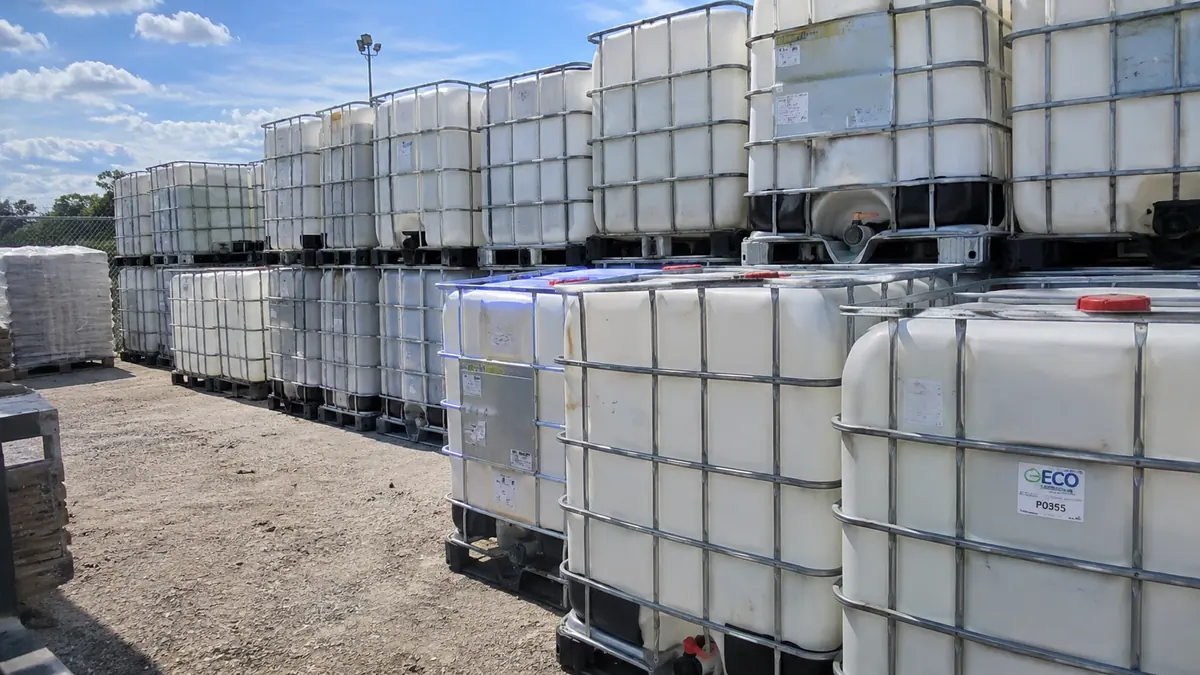
The 275 is the default because it fits on everything and double-stacks for the return trip. The 330 earns its place where you are moving high volumes of a dilute product and your handling equipment has the mast for it.
The 550 is a genuine agricultural tool for bulk water on remote blocks, but it is heavy, it is awkward, and it only makes sense if you really move that much. Ask before you plan around one, because we stock them intermittently.
And remember specific gravity. Concentrated liquid feeds are frequently well above 1.0, which means a 330 cannot be filled to capacity without exceeding its cage rating.
The buy-back that pays for itself
Empty totes wintering in a field are a slow loss. The bottles chalk in the sun, the bases crack when a tractor clips them, and by the following spring a proportion of them are no longer containers.
Every invoice we write carries a buy-back clause. Call us at the end of the season, we collect, you get paid, and you are not storing degrading plastic across a winter. On a reasonable volume that single habit changes the economics of the whole programme.
Written at 9003 Governors Row, Dallas. We publish these without a newsletter wall because gating a specification behind an email address is a small, petty thing to do. If something here is wrong, email us and we will correct it.